

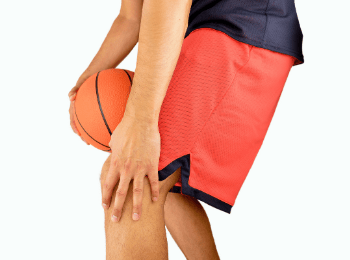
Jumper's Knee (Patella Tendinopathy)
Patella tendinopathy is an overuse injury which causes pain and tenderness in the tendon at the front of the knee. It is often called 'Jumper's Knee', as it is common in athletes who participate in jumping and landing sports.
What is Jumper's Knee (Patella Tendinopathy)?
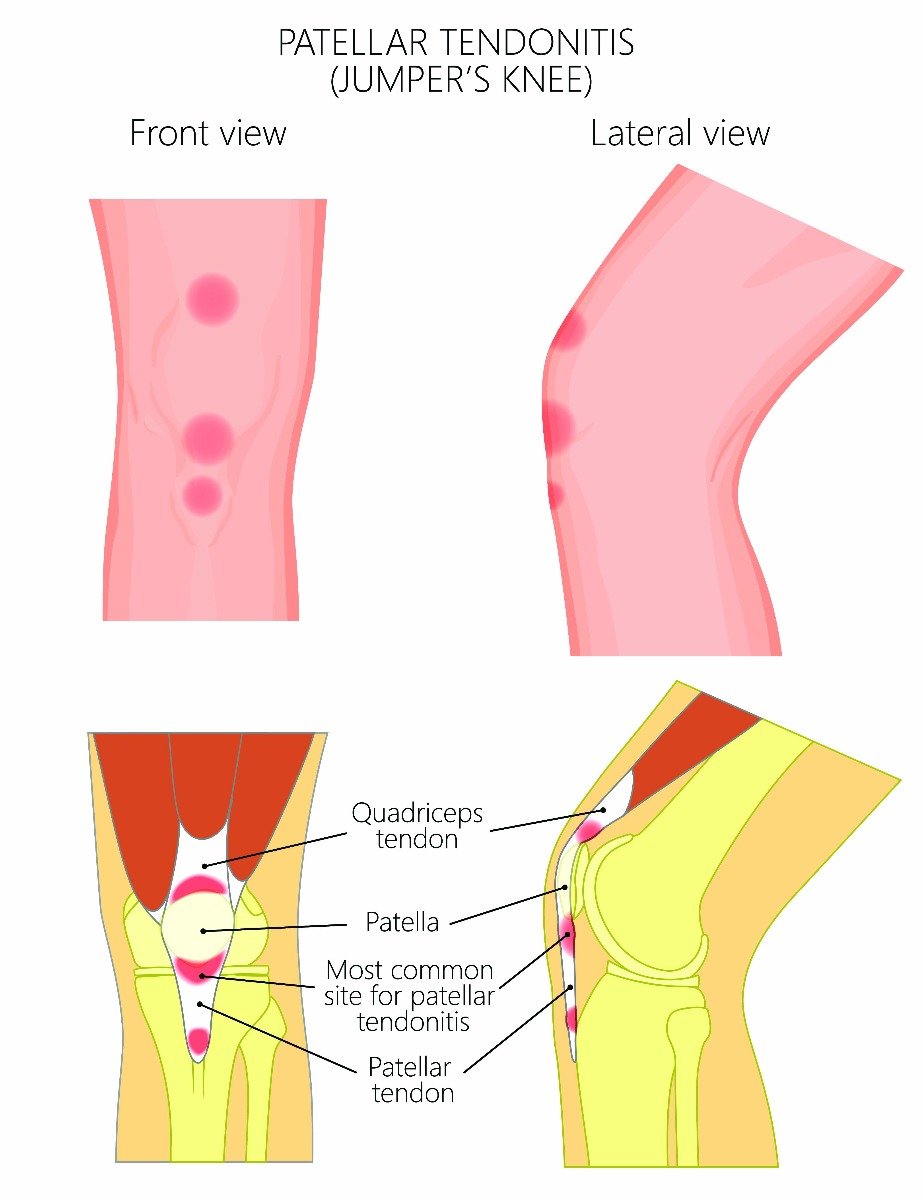
Patellar Tendinopathy is characterized by injury to patellar tendon (the primary connective tissue support that connects the knees to the leg bone). The patellar tendon is subjected to high levels of stress via the action of the knee extensor mechanism.
The quadriceps muscles provide an explosive contraction during jumping, which straightens the knee and pushes you into the air. When landing, the quadriceps muscle helps absorb the landing forces by allowing a small amount of controlled knee bend.
Excessive jumping or landing strains the patella tendon. At first, the damage may only be minor and not cause any problem. However, repeated overstrain of your tendon causes microtrauma. These lesions occurring in the tendon can exceed the rate of repair. The damage will progressively become worse, causing pain and dysfunction. The result is patellar tendinopathy (tendon injury).
It is imperative to mention that patellar lesions should be adequately differentiated and/or identified for optimal management
- Inflammation of patellar tendon is referred to as tendonitis
- Tendinosis is tearing of patellar tendon but without any signs of acute inflammation (such as redness, pain, warmth, swelling etc.)
Jumper's Knee (Patella Tendinopathy)
Signs and Symptoms of Jumper's Knee (Patella Tendinopathy)
Swelling and inflammation are classic symptoms of patellar tendinopathy, besides localized tenderness, restricted knee movement and moderate to severe discomfort. Symptoms include:
Jumper's Knee (Patella Tendinopathy) is similar to Patellafemoral Pain Syndrome (PFPS), and there are some symptoms that can help differentiate the two:
Causes of Jumper's Knee (Patella Tendinopathy)
Jumper's Knee (Patellar Tendinopathy) is primarily caused by overuse or abuse of patellar tendon (or knee joint) during activities like jumping, running, hopping etc. Other causative agents include sudden, intense shock to the knee (for example, suddenly starting or abrupt stopping of a physical activity) or muscle damage or weakness.
Statistics and Epidemiology related to Jumper's Knee (Patella Tendinopathy)
Lorem ipsum dolor sit amet, consectetur adipisicing elit, sed do eiusmod tempor incididunt ut labore et dolore magna aliqua. Ut enim ad minim veniam, quis nostrud exercitation ullamco laboris nisi ut aliquip ex ea
Relevant Statistics or Epidemiology Title if applicable...
Enter your text here...
Relevant Statistics or Epidemiology Title if applicable...
Enter your text here...
How MHC Treatment Options Can Help Condition Title
Enter your text here...
Shoulder Recovery Program
Lorem ipsum dolor sit amet, consectetur adipisicing elit, sed do eiusmod tempor incididunt ut labore et dolore magna aliqua.
Schedule an Appointment Today
If you want to be free from Shoulder Pain don’t hesitate to call us to book a “Your Motion Matters” Initial Case Review today, for a pain free tomorrow.
