

Knee Ligament Injury
The knee is an important part of the body, it supports the leg and thigh bone for weight balance and for shifting the weight on each legs. Any damage to the ligaments presents around the knee causes Knee Ligament Injuries.
What is a Knee Ligament Injury?
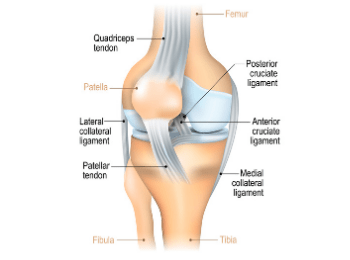
A ligament is a short band of tough fibrous connective tissue composed of long, stringy collagen molecules. Knee ligaments connect bones to other bones in and around your knee joint. They do not connect muscles to bones; that is the function of tendons. Knee ligaments limit the amount of mobility of your knee joint or prevent specific movements altogether.
There are four Knee Ligaments:
- Anterior Cruciate Ligament (ACL): It is one of the major ligaments present in knee. Damage to ACL produces sprains and tears. It is most commonly observed in sports persons and athletes.
- Posterior Cruciate Ligament (PCL): This ligament connects the muscles of thigh bone with the back of the knee. It also connects femur bone with tibia. Damage to this ligament causes pain in both femur and tibia region.
- Medial Collateral Ligament (MCL): It is a ligament which connects the lower part of your leg with the thigh. It helps in supporting the leg and provides a proper bend. An injury to this ligament causes MCL in which a sprain or tear in the medial collateral is observed.
- Lateral Collateral Ligament (LCL): This ligament connects the thigh bone with the fibula. LCL functions a supporter for bending the muscles and provides a full range for rotation. A full arc is achieved in the presence of LCL.
When one or more of these are injured, that is a Knee Ligament Injury.
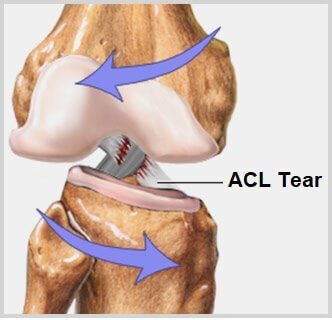
Knee Ligament Injury (ACL tear)
Signs and Symptoms of Knee Ligament Injury
Classic symptoms include:
Causes of Knee Ligament Injury
Some of the causes of Knee Ligament Injury include:
- Direct blow over knee
- Direct stress over knee
- Sudden fall from a height
In most cases, injury to one ligament may increase the risk to other ligaments as well due to excessive strain or pressure and abnormal joint motion.
Some of the associated risk factors that may increase the risk of experiencing a Knee Ligament Injury are:
- History of congenital or acquired bone deformities
- Accidents and traumas
Statistics and Epidemiology related to Knee Ligament Injury
Lorem ipsum dolor sit amet, consectetur adipisicing elit, sed do eiusmod tempor incididunt ut labore et dolore magna aliqua. Ut enim ad minim veniam, quis nostrud exercitation ullamco laboris nisi ut aliquip ex ea
Relevant Statistics or Epidemiology Title if applicable...
Enter your text here...
Relevant Statistics or Epidemiology Title if applicable...
Enter your text here...
How MHC Treatment Options Can Help Condition Title
Enter your text here...
Shoulder Recovery Program
Lorem ipsum dolor sit amet, consectetur adipisicing elit, sed do eiusmod tempor incididunt ut labore et dolore magna aliqua.
Schedule an Appointment Today
If you want to be free from Shoulder Pain don’t hesitate to call us to book a “Your Motion Matters” Initial Case Review today, for a pain free tomorrow.
