

Carpal Tunnel Syndrome
Joint and connective tissue conditions can significantly compromise the quality of life by interfering with the physical independence and productivity. Carpal Tunnel Syndrome, also known as medial compression syndrome, is a common problem that affects the hand.
What is Carpal Tunnel Syndrome
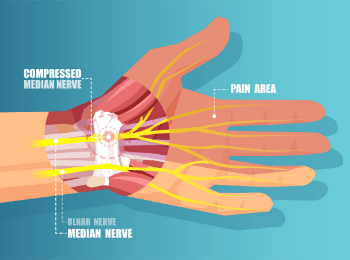
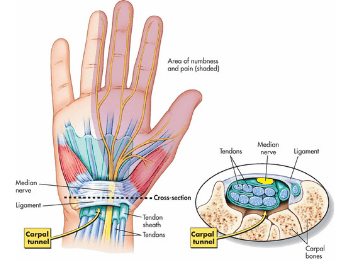
Carpal Tunnel Syndrome is a type of entrapment neuropathy, where the median nerve is compressed as it travels through the wrist’s carpal tunnel. The Carpal Tunnel is an opening in the wrist, that is formed by the carpal bones on the bottom of the wrist, and the transverse carpal ligament across the top of the wrist.
Carpal Tunnel Syndrome
Signs and Symptoms of Carpal Tunnel Syndrome
Hallmark sign and symptoms of Carpal Tunnel Syndrome includes:
Causes of Carpal Tunnel Syndrome
The primary pathophysiology of carpal tunnel syndrome is ‘irritation or compression of median nerve’, due to factors like:
- Accidents or traumatic injuries leading to fracture of wrist joint
- Fracture of carpal bones or dislocation of wrist joint
There are a number of factors that may lead to carpal tunnel syndrome; a few are listed below:
- Anatomical factors such as inherently narrow carpal tunnels
- Occupational factors for example jobs that require long hours of repetitive activity at the level of wrist joint increases the risk of carpal tunnel syndrome such as typing, plumbing, construction industry, drilling industry etc.
- Hormonal factors; this includes pathological conditions like hypothyroidism as well as physiological situations like menopause
Statistics and Epidemiology related to Carpal Tunnel Syndrome
Carpal tunnel syndrome is a fairly common condition that affects 2.7% of the general population according to latest estimates.
It is also the most common nerve entrapment neuropathy, accounting for 90% of all neuropathies.
Relevant Statistics or Epidemiology Title if applicable...
Enter your text here...
How MHC Treatment Options Can Help Carpal Tunnel Syndrome
Chiropractors identify relevant risk factors in your case and devise customized therapeutic regimen for prompt management and early resolution of symptoms. Some popular chiropractic solutions are:
- Warm and cold compresses
- Use of splints
- Active or passive stretching and strengthening exercises to restore the power of muscles/ joints
- Acupuncture
- Therapeutic massage
- Soft tissue mobilization
In addition, chiropractors also provide valuable advice regarding:
- Occupational therapy
- Ergonomics advice to prevent carpal tunnel syndrome (or reduce the intensity of exacerbations)
Shoulder Recovery Program
Lorem ipsum dolor sit amet, consectetur adipisicing elit, sed do eiusmod tempor incididunt ut labore et dolore magna aliqua.
Schedule an Appointment Today
If you want to be free from Shoulder Pain don’t hesitate to call us to book a “Your Motion Matters” Initial Case Review today, for a pain free tomorrow.
