

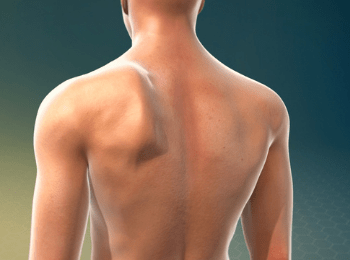
Winged Scapula
The shoulder blade, or scapula, is a large triangular-shaped bone in your upper back. If an injury or condition affects the muscles around the scapula, those that which support it when moving your arm, the position of the scapula can be changed, and produce a ‘winged’ effect. This can happen when your arm is at rest or when it is moving.
What is Winged Scapula?
Winged Scapula (also referred to as scapula alata, scapular dyskinesia or scapula winging) refers to abnormal protrusion or prominence of the scapula at the back.
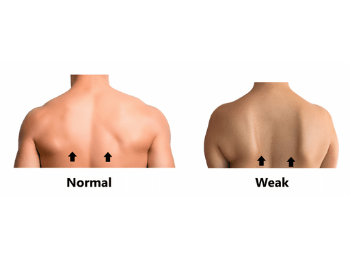
Normal vs Winged Scapula
Signs and Symptoms of Winged Scapula
Most patients present with:
In poorly managed cases, movement and activity of upper limb is significantly compromised due to nerve damage and muscle impingement.
Causes of Winged Scapula
The primary cause of winged scapula or scapula dyskinesia is disorder or dysfunction of scapulothoracic muscles (especially trapezius, serratus anterior, levator scapulae etc.). This can be due to trauma, accident, nerve damage or sports related injuries.
Following risk factors can increase your risk of developing scapular winging:
Statistics and Epidemiology related to Winged Scapula
Winged Scapula is rare and global prevalence is only 2-3 cases per 100,000 individuals
In certain high risk groups (such as cricketers) the prevalence is as high as 39% (1).
A study in Supportive Care for Cancer followed 112people who had undergone axillary dissection, a surgical breast cancer treatment. 8 percent exhibited winged scapula 15 days after surgery (2).
Reference:
(1) http://www.ajol.info/index.php/sasma/article/viewFile/31937/5951
(2) https://link.springer.com/article/10.1007%2Fs00520-016-3086-5
How MHC Treatment Options Can Help Winged Scapula
Enter your text here...
Shoulder Recovery Program
Lorem ipsum dolor sit amet, consectetur adipisicing elit, sed do eiusmod tempor incididunt ut labore et dolore magna aliqua.
Schedule an Appointment Today
If you want to be free from Shoulder Pain don’t hesitate to call us to book a “Your Motion Matters” Initial Case Review today, for a pain free tomorrow.
