

Rotator Cuff Injury
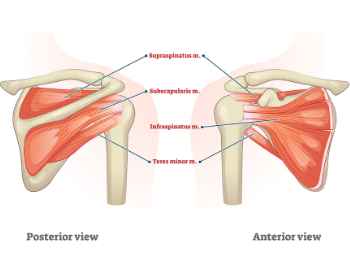
Rotator cuff muscles (collectively include Subscapularis, Teres Minor, Supraspinatus and Infraspinatus) serves as the primary functional support of the shoulder joint. Functional rotator cuff muscles are also required to deliver firm strength to the head and neck muscles in order to ensure ease of rotation in different directions. Any injury to these muscles may present as pain, discomfort and stiffness due to tendonitis, tearing of muscle fibers, bursitis or a combination of these.
What is Rotator Cuff Injury?
A Rotator Cuff Injury tends to fall under two main types: Rotator Cuff Tendinopathy or Tendonitis, and Rotator Cuff strains and/or tears.
Rotator Cuff Tendinopathy/Tendonitis occurs when the tendons in the rotator cuff develops tiny tears in it, or becomes inflamed, leading to pain and irritation.
Rotator Cuff strains or tears occur when the tendons that connect the muscle to the bone are overstretched, torn or pulled completely away from the bone.
Signs and Symptoms of Rotator Cuff Injury
Rotator cuff injuries presents as:
Causes of Rotator Cuff Injury
A Rotator Cuff Injury can be either acute or degenerative. Causes of an Acute Rotator Cuff Injury include abuse, history of direct trauma and/or direct injury to shoulder joint. These type of rotator cuff injuries are usually what is experienced by younger people.
A Degenerative Rotator Cuff Injury are usually caused by overuse or disuse of muscles, chronic stress and longstanding inflammation.
Certain risk factors may make you more vulnerable to develop rotator cuff injuries; these are:
- Elderly (especially individuals over the age of 50 years)
- Individuals with a very dynamic lifestyle such as athletes
- Certain occupations such as construction, plumbing, mining, sewing machine operators, fish and poultry industry.
Statistics and Epidemiology related to Rotator Cuff Injury
In Australia, incidence of rotator cuff injuries is 13.3 per 1,000 individuals per year (1).
Reference:
How MHC Treatment Options Can Help Condition Title
Most athletes and dynamic individuals prefer holistic and chiropractic interventions over surgical and pharmacological interventions to maintain the joint freedom and range of motion.
Shoulder Recovery Program
Lorem ipsum dolor sit amet, consectetur adipisicing elit, sed do eiusmod tempor incididunt ut labore et dolore magna aliqua.
Schedule an Appointment Today
If you want to be free from Shoulder Pain don’t hesitate to call us to book a “Your Motion Matters” Initial Case Review today, for a pain free tomorrow.
