

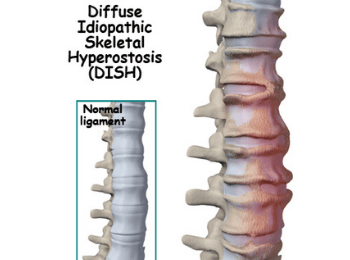
DISH (Diffuse Ideopathic Skeletal Hyperostosis)
DISH (Diffuse Idiopathic Skeletal Hyperostosis) is a condition where the ligaments and tendons harden. It is a type of arthritis. This condition can cause pain, stiffness and decreased mobility. DISH (Diffuse Idiopathic Skeletal Hyperostosis) can be managed through physical therapy, surgery, medications and the application of heat.
Definition of Condition Title
DISH (Diffuse Idiopathic Skeletal Hyperostosis) is a condition that is marked by hardening or calcification of the connective tissue elements (especially ligaments) that connects the bones with the spinal region. In most cases, DISH (Diffuse Idiopathic Skeletal Hyperostosis) (also referred to as Foresteir’s disease) resolves spontaneously over time or with conservative treatments.
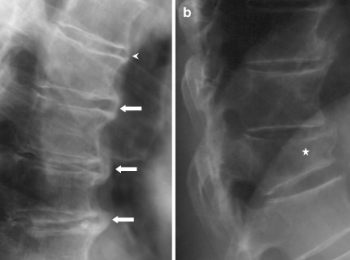
DISH (Diffuse Idiopathic Skeletal Hyperostosis)
Signs and Symptoms of DISH (Diffuse Idiopathic Skeletal Hyperostosis)
This condition is usually asymptomatic (i.e. no specific symptoms are reported). In other cases, individuals may develop:
Causes of DISH (Diffuse Idiopathic Skeletal Hyperostosis)
DISH is an idiopathic condition (suggesting the cause or pathophysiological forces are not fully known). Yet it is believed that certain risk factors can increase the risk of developing this pathology, such as
- male gender
- physiological aging (elderly over the age of 55 years are at much higher risk) and
- co-existing health issues like diabetes, hypertension.
Certain drugs or supplements can also lead to abnormal calcification or hardening of ligaments.
Statistics and Epidemiology related to DISH (Diffuse Idiopathic Skeletal Hyperostosis)
The prevalence of DISH is highly variable; for example, in areas like Netherlands, it is prevalent in 17% of the general population. In other parts of the world, prevalence fluctuates between 0.16 to 17%.
Reference:
- Westerveld LA, Verlaan JJ, Oner FC. Spinal fractures in patients with ankylosing spinal disorders: a systematic review of the literature on treatment, neurological status and complications. Eur Spine J. Feb 2009;18(2):145-56
Relevant Statistics or Epidemiology Title if applicable...
Enter your text here...
How MHC Treatment Options Can Help Condition Title
Enter your text here...
Shoulder Recovery Program
Lorem ipsum dolor sit amet, consectetur adipisicing elit, sed do eiusmod tempor incididunt ut labore et dolore magna aliqua.
Schedule an Appointment Today
If you want to be free from Shoulder Pain don’t hesitate to call us to book a “Your Motion Matters” Initial Case Review today, for a pain free tomorrow.
