

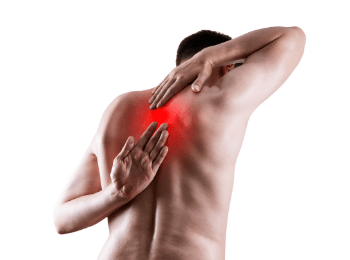
Thoracic Disc Injury
A Thoracic Disc Injury is an injury that is done to the intevertebral disc in the mid-back. There are two main types of Thoracic Disc Injuries - Bulging Disc, and Ruptured or Herniated Disc.
What is Thoracic Disc Injury?
Between each vertebra in our spine is a structure called a disc. This disc is like a jelly-filled donut with a liquid-type material in the middle called the nucleus pulposus. When injured, the outer rim (annulus fibrosis) of the disc can weaken, and the nucleus can press outwards on the weakened disc wall, causing your disc to bulge outwards. If the outer rim tears, this can allow the liquid-type nucleus material to escape and results in low back pain.
A bulging disc commonly describes a slipped disc or a protruding disc. However, when the disc bulge is significant enough for the disc nucleus to come out of the annulus, it is known as a herniated disc.
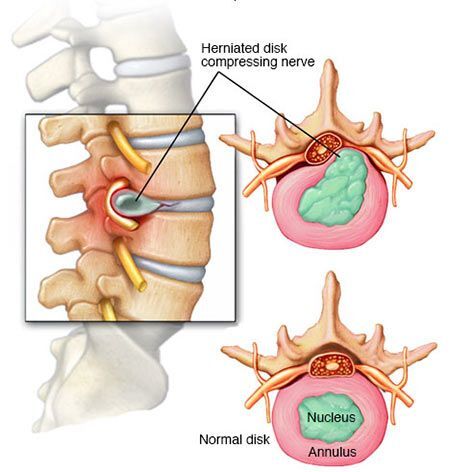
Thoracic Disc Injury
Signs and Symptoms of Thoracic Disc Injury
Thoracic disc injury usually presents with moderate to severe back pain that is often associated with neurological symptoms, such as:
Causes of Thoracic Disc Injury
Most cases of Thoracic Disc Injury are caused by the rupture or injury to nucleus pulposus and damage to the external fibres of intervertebral discs (annulus). Due to lack of a fibrous support, the risk of nucleus pulposus protrusion increases significantly leading to neurological damage. In severe cases of Thoracic Disc Injury, muscle weakness or paralysis may also occur.
Primary causes of Thoracic Disc Injury are:
- Application of too much pressure on the disc
- Disc herniation
- Falling from a significant height
- Weakness of annulus due to spinal injury
- Pressure on the thoracic spine due to a tumorous growth
Statistics and Epidemiology related to Thoracic Disc Injury
The prevalence of thoracic disc pain due to spinal injury is 10% (1)
Reference:
- Briggs, A. M., Smith, A. J., Straker, L. M., & Bragge, P. (2009). Thoracic spine pain in the general population: prevalence, incidence and associated factors in children, adolescents and adults. A systematic review. BMC musculoskeletal disorders, 10(1), 77. http://www.biomedcentral.com/1471-2474/10/77
Relevant Statistics or Epidemiology Title if applicable...
Enter your text here...
How MHC Treatment Options Can Help Condition Title
Enter your text here...
Shoulder Recovery Program
Lorem ipsum dolor sit amet, consectetur adipisicing elit, sed do eiusmod tempor incididunt ut labore et dolore magna aliqua.
Schedule an Appointment Today
If you want to be free from Shoulder Pain don’t hesitate to call us to book a “Your Motion Matters” Initial Case Review today, for a pain free tomorrow.
